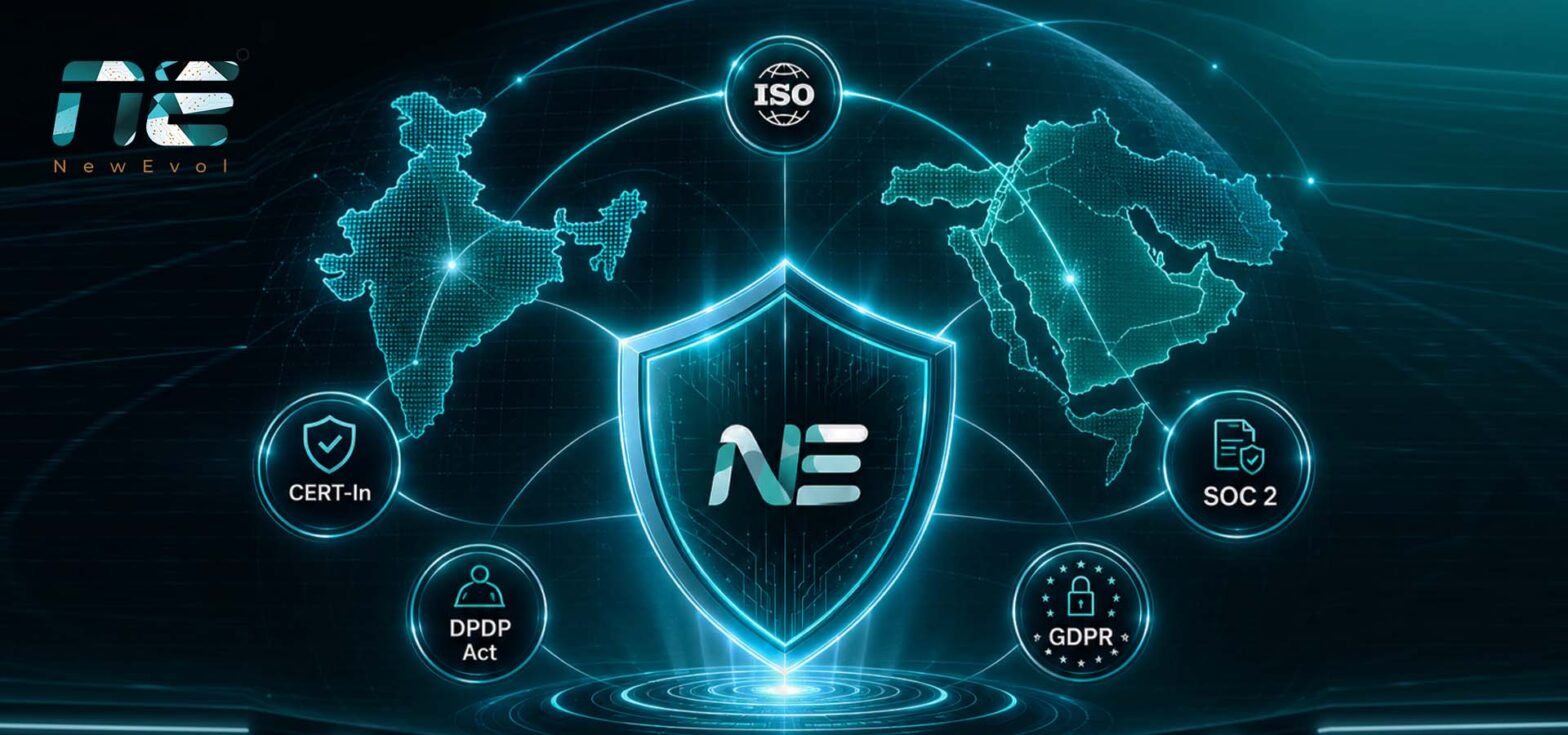
Organizations across India and the Middle East are facing growing pressure to strengthen cybersecurity while meeting increasingly complex regulatory requirements. Every day, businesses generate massive amounts of security logs from cloud environments, endpoints, firewalls, applications, identity platforms, and network devices. Managing this data effectively is no longer just a security requirement it has become a critical part of demonstrating compliance during audits and regulatory assessments.
A modern compliance siem platform helps organizations centralize security data, monitor events continuously, automate reporting, and maintain detailed audit trails. Rather than relying on disconnected security tools and manual processes, enterprises can gain a unified view of their infrastructure while simplifying compliance with regional regulations.
As cyber threats become more sophisticated and regulations continue to evolve, security and compliance teams must work together. An effective Security Information and Event Management (SIEM) solution enables organizations to detect threats faster, respond efficiently, and produce the evidence needed for regulatory audits without increasing operational complexity.
Why Compliance and Security Must Work Together
Security and compliance have traditionally been treated as separate functions. Security teams focused on preventing attacks, while compliance teams ensured adherence to regulations. Modern enterprises can no longer afford this separation.
Organizations operate across multiple offices, cloud providers, remote work environments, and third-party ecosystems. Every new application, user, or connected device expands the attack surface while introducing additional compliance responsibilities.
Several factors make integrated security and compliance essential:
- Increasing cyberattacks targeting critical infrastructure and enterprise data
- Expanding regional privacy and cybersecurity regulations
- Growing complexity of hybrid and multi-cloud environments
- Remote workforce security challenges
- Supply chain and third-party risks
- Rising expectations from regulators and customers
Manual compliance processes often rely on spreadsheets, screenshots, and periodic log collection. These methods consume significant time, increase the risk of human error, and make audits more difficult. A centralized SIEM eliminates many of these challenges by continuously collecting, correlating, and storing security events.
When security monitoring and compliance reporting work together, organizations gain stronger visibility, faster investigations, and greater confidence during regulatory assessments.
Understanding Compliance Requirements Across India and MEA
Enterprises operating across India and the Middle East often need to satisfy multiple regulatory frameworks simultaneously. Although each regulation has unique requirements, many share common expectations around security monitoring, log retention, incident reporting, and data governance.
India
Several important regulations influence cybersecurity operations, including:
- Digital Personal Data Protection (DPDP) Act 2023
- RBI Cyber Security Framework for financial institutions
- CERT-In Directions for cybersecurity incident reporting
- IRDAI cybersecurity requirements for insurers
- SEBI cybersecurity guidelines for capital markets
These frameworks encourage organizations to maintain accurate security records, monitor systems continuously, respond promptly to incidents, and protect sensitive personal information.
Middle East
Many countries across the MEA region have introduced cybersecurity and privacy regulations to strengthen digital resilience. Common frameworks include:
- Saudi National Cybersecurity Authority Essential Cybersecurity Controls (NCA ECC)
- National Electronic Security Authority (NESA) requirements in the UAE
- Saudi Central Bank (SAMA) Cyber Security Framework
- UAE Personal Data Protection Law (PDPL)
- Qatar National Information Assurance Framework
- Bahrain Personal Data Protection Law
These regulations commonly require organizations to maintain:
- Comprehensive log retention
- Continuous monitoring
- Incident reporting procedures
- Data governance controls
- Audit evidence
- Risk management practices
Organizations operating across multiple countries often need a single platform capable of supporting diverse regulatory expectations while maintaining operational efficiency.
What Makes a SIEM Compliance Ready?
A modern SIEM goes beyond collecting security logs. It provides the capabilities required to improve visibility, simplify investigations, and support regulatory compliance across complex enterprise environments.
Centralized Log Collection
Security events originate from numerous systems across the enterprise. A compliance-ready SIEM consolidates logs from:
- Servers
- Firewalls
- Cloud platforms
- Identity and access management systems
- Business applications
- Endpoints
- Databases
- Network devices
Having all security data in one location enables faster investigations and reduces the effort required to gather evidence during audits.
Continuous Monitoring
Continuous monitoring helps security teams identify suspicious behavior as it occurs instead of discovering issues weeks later.
Key monitoring capabilities include:
- Real-time event analysis
- Threat detection
- Policy violation alerts
- Unauthorized access monitoring
- Abnormal user activity detection
Early detection reduces response times while providing a detailed timeline for compliance reporting.
Long-Term Log Retention
Many regulations require organizations to retain security logs for defined periods. A modern SIEM supports secure, searchable, and tamper-resistant storage that preserves data integrity while allowing authorized users to retrieve historical events quickly.
This capability simplifies investigations, internal reviews, and regulatory audits without relying on multiple storage systems.
Audit Readiness
Preparing audits often requires collecting information from multiple security tools. A centralized SIEM streamlines this process by maintaining:
- Complete audit trails
- Historical event records
- Investigation timelines
- Compliance-ready reports
Instead of manually assembling evidence, organizations can quickly produce the documentation required by internal auditors and regulatory authorities.
Essential Features Security Leaders Should Evaluate
Selecting the right SIEM requires more than comparing dashboards. Security leaders should prioritize platforms that combine advanced detection with automation and operational flexibility.
Important capabilities include:
- AI-assisted threat detection for identifying unusual behavior
- Behavioral analytics to detect insider threats and compromised accounts
- Integrated threat intelligence for faster detection of known indicators
- Automated incident response workflows that reduce manual effort
- Built-in case management for investigation tracking
- Cloud-native monitoring across public, private, and hybrid environments
- Multi-cloud visibility from a centralized console
- Identity monitoring to detect privilege misuse
- Open APIs and third-party integrations with existing security tools
- Custom compliance dashboards for different regulatory frameworks
- High availability and scalable architecture to support enterprise growth
Solutions such as NewEvol demonstrate how modern SIEM platforms can combine automation, centralized visibility, and flexible deployment to help enterprises strengthen both security operations and compliance readiness across India and the MEA region while adapting to evolving regulatory requirements.
Benefits of Using a Compliance-Focused SIEM
A modern SIEM delivers value beyond threat detection by helping organizations simplify regulatory compliance while improving operational efficiency. When security data is centralized and continuously monitored, both security and compliance teams can work from a single source of truth.
Key benefits include:
- Faster preparation for internal and external audits
- Reduced manual effort for compliance reporting
- Improved visibility across cloud, on-premises, and hybrid environments
- Quicker incident detection and response
- Better governance through centralized log management
- Consistent reporting across business units
- Faster forensic investigations
- Improved collaboration between SOC, IT, and compliance teams
- Enhanced executive reporting through real-time dashboards
These capabilities help organizations reduce operational risk while maintaining confidence that critical security events are being monitored and documented.
Common Compliance Challenges Without Modern SIEM
Organizations relying on disconnected security tools often struggle to maintain consistent compliance. Security logs may be scattered across multiple systems, making investigations slow and audit preparation time-consuming.
Common challenges include:
- Manual collection of audit evidence
- Siloed log sources across departments
- Missing or incomplete audit trails
- Delayed incident investigations
- Limited visibility into security events
- High operational and compliance costs
- Increased risk of human error
- Difficulty meeting reporting deadlines
- Alert fatigue caused by excessive false positives
- Inconsistent reporting across different business locations
These challenges not only increase compliance risk but can also delay incident response and reduce the effectiveness of security operations.
Best Practices for Successful SIEM Deployment
A successful SIEM implementation begins with clear planning rather than technology alone. Organizations should align security objectives with compliance requirements before deployment.
Recommended best practices include:
- Define security and compliance goals before implementation.
- Identify and prioritize critical business systems.
- Inventory all log sources across the enterprise.
- Establish log retention policies based on applicable regulations.
- Configure use cases for high-risk assets first.
- Automate repetitive compliance and reporting tasks.
- Integrate external threat intelligence feeds.
- Regularly review and tune detection rules to reduce false positives.
- Test compliance reports before audits.
- Conduct periodic security assessments and compliance reviews.
- Train SOC analysts and compliance teams on platform capabilities.
- Continuously monitor platform performance and optimize data collection.
Following these practices helps maximize the value of a SIEM while ensuring long-term scalability and regulatory readiness.
Supporting Security and Compliance Across India and MEA
Enterprises operating across multiple countries require consistent security visibility despite different regulatory obligations. A modern SIEM should provide flexible deployment options that support on-premises, cloud, and hybrid infrastructures while enabling centralized monitoring from a single console.
Important capabilities include:
- Unified dashboards for multiple business locations
- Regional data governance support
- Automated compliance reporting
- Multi-cloud monitoring
- Centralized security operations
- Role-based access controls
- Integration with existing security technologies
- Scalable architecture for enterprise growth
Solutions like NewEvol illustrate how organizations can combine centralized visibility, automation, and flexible deployment models to strengthen cybersecurity while supporting compliance initiatives across India and the MEA region. The objective is not only to meet regulatory requirements but also to build resilient security operations that adapt to evolving threats and business needs.
Conclusion
Regulatory compliance and cybersecurity are no longer separate business priorities. Organizations across India and the Middle East must continuously monitor their environments, maintain accurate audit records, and respond quickly to security incidents while meeting diverse regional regulations.
Investing in a modern SIEM solution enables enterprises to centralize security data, automate reporting, improve governance, and strengthen incident response. By selecting a platform designed to support both operational security and regulatory requirements, organizations can reduce compliance complexity while improving overall cyber resilience.
Frequently Asked Questions
1. What is a compliance-ready SIEM?
A compliance-ready SIEM collects, stores, analyzes, and monitors security events while providing reporting, audit trails, and log retention capabilities that help organizations satisfy regulatory requirements.
2. How does SIEM simplify regulatory audits?
It centralizes security logs, preserves audit evidence, automates reporting, and provides searchable historical records, reducing the manual effort required during compliance assessments.
3. Which regulations should Indian enterprises consider?
Organizations should evaluate requirements under the DPDP Act 2023, RBI Cyber Security Framework, CERT-In Directions, IRDAI cybersecurity guidelines, and SEBI regulations based on their industry.
4. Which compliance frameworks are common across the MEA region?
Common frameworks include Saudi NCA ECC, SAMA Cyber Security Framework, UAE PDPL, NESA requirements, Qatar National Information Assurance Framework, and Bahrain PDPL.
5. How long should security logs be retained?
Retention periods vary depending on industry and regulatory requirements. Organizations should establish policies that align with applicable laws and internal governance standards.
6. Can SIEM automate compliance reporting?
Yes. Most enterprise SIEM platforms can generate scheduled reports, executive dashboards, compliance summaries, and audit-ready documentation automatically.