
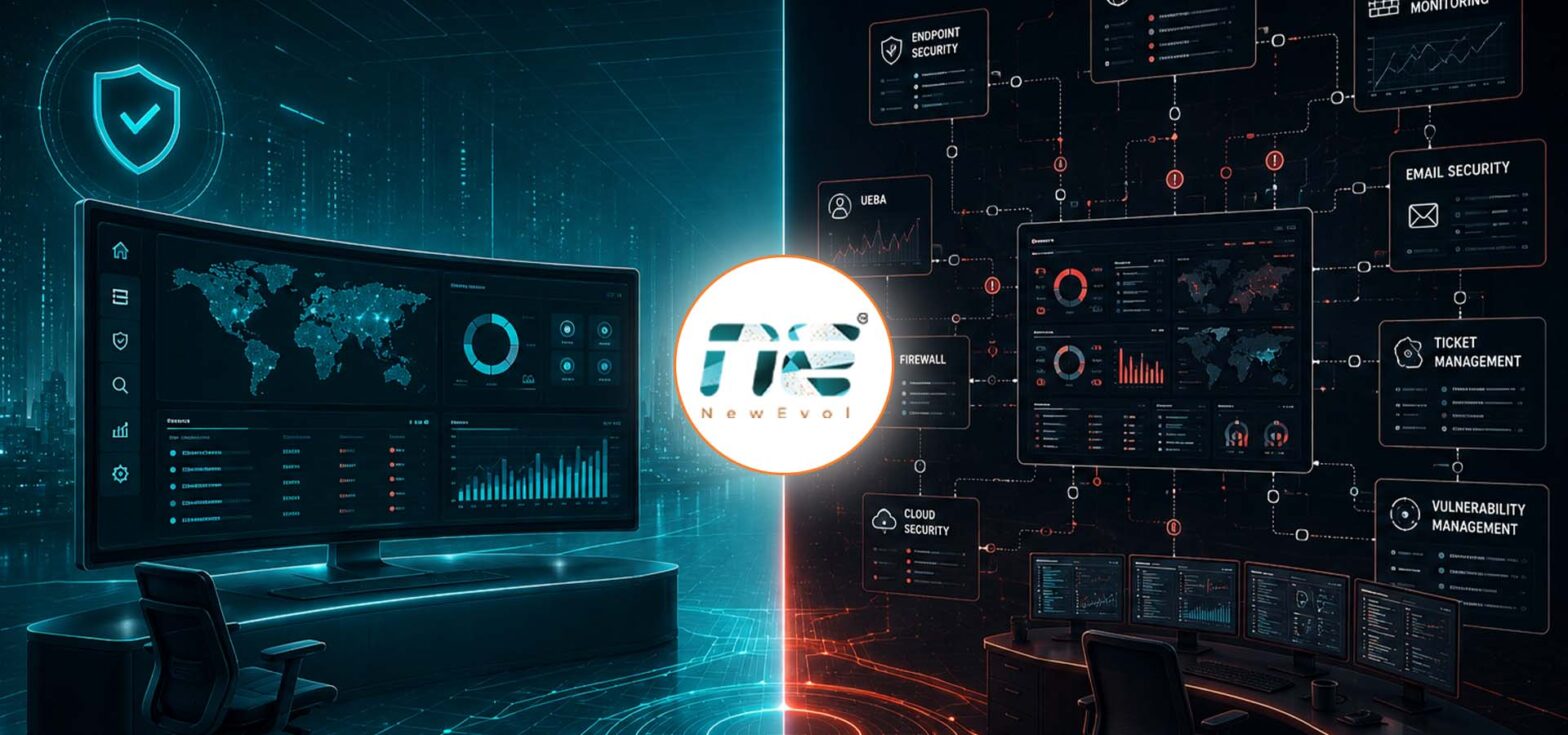
Security teams face a recurring architectural question: should security operations run through a single, unified SIEM platform, or through a collection of specialized tools working together? This decision shapes analyst workflows, incident response speed, and long-term SOC maturity.
Both approaches have valid use cases. A multi-tool SOC offers flexibility and specialization, while a single-console SIEM offers centralized visibility and streamlined operations. This article provides a practical SIEM platform comparison to help security leaders evaluate which architecture best supports their organization’s needs.
What Is a Single-Console SIEM?
A single-console SIEM consolidates log collection, correlation, alerting, and investigation into one unified interface. Instead of switching between multiple products, analysts work from a centralized platform that aggregates data from network devices, endpoints, cloud services, identity systems, and applications.
This architecture is built around the idea that security data is more useful when it lives in one place. Correlation rules can span data sources without manual integration work, and analysts can move from alert to investigation without leaving the platform.
What Is a Multi-Tool SOC?
A multi-tool SOC relies on a combination of specialized security products, such as separate tools for log management, endpoint detection, network monitoring, threat intelligence, and case management. Each tool is often best-in-class for its specific function, and organizations may adopt this approach gradually as new security needs arise.
The tradeoff is that analysts must work across several interfaces, and security teams must build and maintain the integrations that connect these tools together. Visibility depends on how well those integrations are designed and maintained over time.
Single-Console SIEM vs. Multi-Tool SOC: Key Differences
The core difference between these two models is architectural. A single-console SIEM centralizes data and workflows by design. A multi-tool SOC distributes functionality across specialized products and depends on integration of work to create a unified picture.
Neither approach is inherently right or wrong. The better fit depends on organizational size, existing infrastructure, analyst expertise, compliance requirements, and long-term security strategy.
Comparison at a Glance
|
Factor |
Single-Console SIEM |
Multi-Tool SOC |
|
Visibility |
Centralized across all connected data sources |
Depends on integration quality between tools |
|
Analyst Workflow |
One interface for detection through investigation |
Multiple interfaces depending on the task |
|
Investigation |
Faster context gathering within one platform |
Slower due to switching between systems |
|
Integrations |
Fewer external dependencies to manage |
Requires ongoing API and data normalization work |
|
Maintenance |
Centralized updates and configuration |
Multiple vendors, upgrade cycles, and skill sets |
|
Scalability |
Scales within one architecture |
Scales but often requires new integrations per tool |
|
Cost Management |
Fewer hidden integration and training costs |
Lower per-tool cost but higher overall overhead |
|
Analyst Productivity |
More consistent workflows, less context switching |
Can vary widely based on integration maturity |
Visibility and Situational Awareness
Centralized visibility is one of the clearest advantages of a single-console SIEM. When security data from across the environment flows into one platform, analysts can see relationships between events without switching contexts.
In a multi-tool SOC, visibility depends heavily on integration quality. When tools are properly connected, teams can still achieve strong situational awareness. However, fragmented dashboards can create blind spots, especially when data from one tool is not easily correlated with data from another. This fragmentation can slow down the recognition of multi-stage attacks that span different systems.
Operational Efficiency
Operational efficiency often comes down to how many consoles an analyst needs to monitor during a shift. A single-console SIEM reduces this number, allowing analysts to manage alerts, investigations, and reporting from one place.
In a multi-tool SOC, analysts may need to check out several systems to build a complete picture of an incident. This adds steps to routine tasks and can slow down alert triage, particularly during high-volume periods. Centralized workflows tend to reduce repetitive manual work and support more consistent SOC operations.
Integration Complexity
Multi-tool environments require ongoing integration of work. Connecting products through APIs, normalizing data formats, and maintaining correlation logic across tools takes engineering effort that grows as more products are added.
Each new integration introduces a dependency that must be maintained through vendor updates, API changes, and configuration adjustments. Over time, this can increase the operational burden on security engineering teams, even when each individual tool performs well on its own.
A single-console SIEM architecture reduces this complexity because data ingestion and correlation are handled within one platform, minimizing the number of external dependencies the security team must manage.
Investigation Speed
Investigation speed depends on how quickly an analyst can move from detecting an alert to understanding its context. In a single-console SIEM, related events, historical data, and enrichment information are typically available within the same interface, reducing delays caused by switching tools.
In a multi-tool SOC, analysts often need to pivot between systems to gather the full picture, such as checking endpoint data in one tool and network logs in another. This context switching can extend investigation timelines, particularly for incidents that span multiple systems or data sources.
Centralized investigation workflows help analysts correlate related events faster, which can meaningfully reduce the time it takes to investigate and respond.
Maintenance and Management Overhead
Maintaining a multi-tool SOC means managing multiple vendors, license renewals, product upgrades, and technical documentation. Each tool may follow its own release cycle, requiring coordination to avoid disrupting operations.
This also requires broader skill coverage, since analysts and engineers need familiarity with several distinct platforms. As the environment grows, maintaining consistency across tools becomes more demanding.
A single-console SIEM reduces this overhead by consolidating updates, configuration, and monitoring within one platform, freeing security teams to spend more time on analysis and less on system upkeep.
Total Cost of Ownership
Cost comparisons should go beyond individual product pricing. While a multi-tool SOC may appear cost-effective when evaluating each tool separately, total cost of ownership includes several additional factors:
- Licensing and infrastructure costs for each tool
- Integration development and ongoing maintenance
- Analyst time spent switching between systems
- Training required to maintain proficiency across multiple platforms
- Engineering resources needed to keep integrations functioning
The cheapest individual tools do not necessarily produce the lowest overall SOC cost. Integration and maintenance expenses, along with lost analyst productivity from context switching, often offset initial savings. A single-console SIEM can reduce some of these hidden costs by minimizing the number of systems that require separate management.
Scalability and SOC Maturity
As organizations grow, so does the volume of alerts, log sources, and infrastructure that security teams must monitor. A single-console SIEM is generally built to scale data ingestion and correlation within one architecture, simplifying growth planning.
A multi-tool SOC can also scale, but each additional data source may require new integration work, slowing the pace of expansion. Long-term SOC maturity depends on the ability to add new capabilities without significantly increasing operational complexity.
Organizations with well-maintained multi-tool environments can achieve strong maturity, but doing so requires ongoing investment in integration and process discipline.
Impact on Security Analyst Productivity
Analyst productivity is closely tied to architecture. Constant context switching between tools contributes to alert fatigue and slows down triage, especially during high-alert-volume periods.
A single-console SIEM supports more consistent workflows, since analysts follow the same investigation process regardless of the type of alert. This consistency can reduce cognitive load and help newer analysts ramp up more quickly.
In a multi-tool SOC, productivity depends on how well the tools are integrated and how much manual correlation analysts must perform. Well-designed integrations can minimize this impact, but gaps in tooling often shift extra work onto analysts.
Which Security Operations Approach Is Right for Your Organization?
There is no universal answer. Organizations with mature integration capabilities, specialized tooling requirements, or existing investments in best-of-breed products may find a multi-tool SOC well suited to their needs.
Organizations looking to reduce operational complexity, improve analyst efficiency, or consolidate visibility across a growing environment may benefit more from a single-console SIEM architecture.
The right choice depends on factors such as:
- Organization size and security team capacity
- Existing security infrastructure and prior tool investments
- Analyst expertise and available engineering resources
- Compliance and regulatory requirements
- Long-term security operations strategy
How a Unified Security Architecture Can Simplify SOC Operations
For organizations evaluating ways to reduce fragmentation, a unified SIEM platform can help bring log management, correlation, and investigation into a single environment. This approach is designed to support centralized visibility and integrated workflows without requiring teams to manage as many separate integrations as possible.
NewEvol is an example of a unified SIEM platform built around this principle, aiming to simplify security operations through centralized visibility and streamlined analyst workflows. Rather than replacing every specialized capability, the goal of a unified architecture is to reduce the operational burden that comes with managing multiple disconnected tools.
Key Takeaways
- Single-console SIEM architectures centralize visibility, reduce tool switching, and simplify maintenance.
- Multi-tool SOC environments offer specialization and flexibility but require ongoing integration effort.
- Total cost of ownership should account for integration, maintenance, and analyst time, not just licensing.
- Scalability and SOC maturity depend on how easily new data sources and capabilities can be added.
- Analyst productivity is directly influenced by how much context switching an architecture requires.
- The right approach depends on organizational size, resources, and long-term security strategy.
Final Thoughts
Choosing between a single-console SIEM and a multi-tool SOC is not simply about picking up the newest technology or the lowest-priced tools. It is about understanding how each architecture affects visibility, analyst workload, investigation speed, and long-term scalability.
Security leaders evaluating their current SOC setup should look closely at how much time analysts spend switching between systems, how integration maintenance affects engineering capacity, and whether current tooling can scale alongside the organization’s growth. This kind of comparison offers a useful starting point for identifying visibility gaps, workflow inefficiencies, and hidden costs that may be limiting SOC performance.
Frequently Asked Questions
1.What is a single-console SIEM?
A single-console SIEM is a security platform that consolidates log collection, correlation, alerting, and investigation into one unified interface, allowing analysts to manage security operations without switching between multiple tools.
2. What is a multi-tool SOC?
A multi-tool SOC is a security operations model built on multiple specialized products, such as separate tools for endpoint detection, log management, and threat intelligence, connected through integrations to share data and context.
3. Is a single-console SIEM better than using multiple security tools?
Neither approach is universally better. A single-console SIEM offers simplified operations and centralized visibility, while a multi-tool SOC offers flexibility and specialized capabilities. The right fit depends on the organization’s resources and requirements.
4. How does a unified SIEM improve analyst productivity?
A unified SIEM reduces context switching by consolidating alerts, investigation context, and historical data in one place, helping analysts follow consistent workflows and respond to incidents more efficiently.
5. Which SOC architecture is more cost-effective?
Cost-effectiveness depends on the total cost of ownership, not just licensing. A multi-tool SOC may have lower upfront costs but higher integration and maintenance expenses, while a single-console SIEM can reduce hidden operational costs over time.
6. How should an organization choose between a single-console SIEM and a multi-tool SOC?
Organizations should evaluate their team size, existing infrastructure, integration capabilities, compliance needs, and long-term security goals before deciding which architecture best supports their SOC operations.