
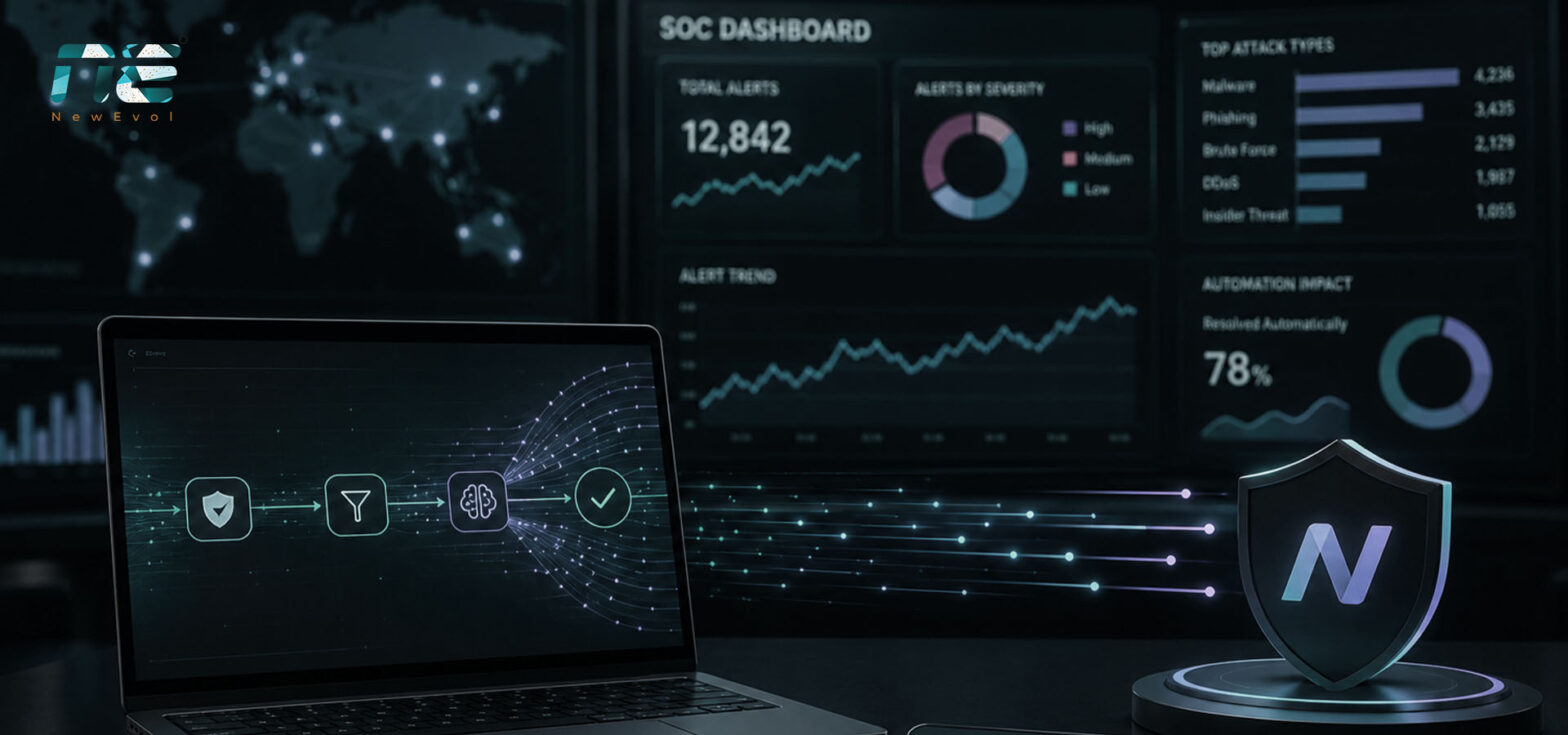
Security teams are dealing with more alerts than ever before, and attacks are moving faster than manual processes can keep up with. Analysts are stretched thin, skilled talent is hard to find, and the pressure to respond quickly keeps growing. This combination is why automating security operations has become one of the most important capabilities a modern security team can build.
This guide breaks down what security operations automation actually means, the technologies behind it, the benefits it delivers, and how organizations can start evaluating an automated SOC platform that fits their needs.
What Is SOC Automation?
SOC automation refers to using technology to handle repetitive, time-consuming security tasks that would otherwise require manual effort from analysts. This includes tasks like triaging alerts, gathering context on a potential threat, and even executing predefined response actions.
Traditionally, security operations relied heavily on manual work: analysts reviewing alerts one by one, pulling data from multiple tools, and manually deciding on next steps. This approach becomes unsustainable as alert volumes grow.
SIEM platforms collect and correlate security data, while SOAR, short for Security Orchestration, Automation, and Response, adds the automation and orchestration layer on top. Together, they form the backbone of SOC automation, allowing teams to detect issues and act on them faster.
Why Security Teams Need SOC Automation
Several factors are driving the shift toward automation:
- Alert overload: Security tools generate far more alerts than analysts can manually review.
- Analyst shortages: Finding and retaining skilled security talent remains difficult across the industry.
- Faster cyberattacks: Modern threats move quickly, leaving little room for delayed responses.
- Repetitive manual investigations: Analysts often spend hours on tasks that follow the same steps every time.
- Compliance requirements: Documentation and reporting demands continue to grow.
- Operational efficiency: Teams need to do more without proportionally growing headcount.
- Reduced security fatigue: Constant alert noise leads to burnout and missed threats.
Automation directly addresses each of these pressures by handling routine work so analysts can focus on higher-value investigation and decision-making.
Core Technologies Behind SOC Automation
SIEM
Security Information and Event Management platforms collect and correlate log data from across the environment, forming the foundation for detection.
SOAR
Security Orchestration, Automation, and Response platforms connect tools together and execute automated workflows in response to alerts.
Threat Intelligence
Threat intelligence feeds provide context on known indicators, helping automated systems prioritize genuine threats.
AI-Assisted Detection
AI models help identify subtle patterns and anomalies that traditional rule-based detection might miss.
Machine Learning
Machine learning continuously refines detection accuracy by learning from historical data and analyst feedback.
Automation Playbooks
Predefined playbooks outline the exact steps to take for common incident types, ensuring consistency.
Security Integrations
Integrations connect SOC automation tools with firewalls, endpoint protection, ticketing systems, and other infrastructure.
Together, these technologies create a connected system where detection, investigation, and response happen with far less manual intervention.
Benefits of Automating Security Operations
- Faster threat detection through continuous, automated monitoring.
- Quicker incident response with predefined, automated actions.
- Improved analyst productivity by removing repetitive manual work.
- Reduced alert fatigue through smarter alert prioritization.
- Standardized workflows that ensure consistent incident handling.
- Better compliance reporting with automatically generated documentation.
- Lower operational costs compared to scaling manual processes.
- Improved security visibility across the entire environment.
- Enhanced cyber resilience through faster containment of threats.
- Scalability that supports growing organizations without proportional headcount increases.
These benefits combine to strengthen both the technical and business sides of security operations.
Common SOC Automation Use Cases
- Phishing investigation: Automatically analyzing suspicious emails and taking action on confirmed threats.
- Malware response: Isolating infected systems and initiating remediation steps.
- Endpoint isolation: Quickly quarantining compromised devices to prevent lateral movement.
- Threat intelligence enrichment: Automatically adding context to alerts using external threat data.
- Vulnerability prioritization: Ranking vulnerabilities based on risk and exploitability.
- User account compromise response: Disabling accounts and resetting credentials automatically.
- Ransomware containment: Isolating affected systems to limit spread.
- Automated ticket creation: Generating incident tickets without manual data entry.
- Incident escalation: Routing high-severity incidents to the right team automatically.
- Compliance reporting: Producing audit-ready documentation on a scheduled basis.
How to Choose an Automated SOC Platform
When evaluating a SOC automation solution, consider:
- Ease of integration with your existing security stack.
- Automation capabilities and how flexible the workflows are.
- Playbook flexibility to adapt to your organization’s specific processes.
- Threat intelligence integration for better context and prioritization.
- Scalability to support growth over time.
- User experience for the analysts who use it daily.
- Reporting and dashboards that provide clear, actionable insight.
- Vendor support and responsiveness.
- Transparent pricing with clearly defined costs.
- Total cost of ownership, not just the upfront price.
Focus on long-term value rather than choosing a platform based solely on the lowest cost.
Best Practices for Successful SOC Automation
- Start with repetitive, well-understood tasks before automating complex processes.
- Build standardized playbooks that reflect your team’s actual workflows.
- Regularly update automation workflows as threats and tools evolve.
- Maintain human oversight for decisions with significant impact.
- Measure automation performance against clear metrics.
- Continuously improve processes based on what you learn.
- Train SOC analysts to work effectively alongside automated systems.
- Integrate automation with existing security tools rather than replacing them outright.
Common Challenges and How to Overcome Them
- Poor workflow design: Address this by mapping processes carefully before automating them.
- Integration complexity: Choose platforms with strong native integrations to reduce friction.
- Over-automation: Keep human review in place for high-stakes decisions.
- False positives: Continuously tune detection rules and playbooks.
- Skills gaps: Invest in training so teams can manage and improve automated workflows.
- Limited visibility: Ensure automation tools provide clear, centralized reporting.
- Change management: Introduce automation gradually with proper stakeholder buy-in.
- Governance: Establish clear ownership and review processes for automated actions.
How NewEvol Helps Organizations Modernize Security Operations
NewEvol supports enterprises looking to modernize their security operations through intelligent automation. The platform combines security orchestration, automated incident response, and AI-assisted threat detection to help teams work more efficiently.
Key capabilities include workflow automation that reduces manual effort, threat intelligence integration for better context, and centralized visibility across the security environment. This allows analysts to investigate faster, reduce their overall workload, and scale operations without adding proportional headcount.
The goal is straightforward: help security teams spend less time on repetitive tasks and more time on the investigations that truly require human judgment.
Conclusion
SOC automation has become a critical capability for organizations that want to keep pace with growing alert volumes and increasingly fast-moving cyber threats. By combining SIEM, SOAR, threat intelligence, and automation playbooks, security teams can detect threats faster, respond more consistently, and reduce the burnout that comes with manual, repetitive work.
Solutions built around intelligent automation illustrate how organizations can simplify security operations while keeping analysts firmly in control of critical decisions. As threats continue to evolve, automating security operations is quickly shifting from a nice-to-have to a core requirement.
If your SOC still relies heavily on manual processes, now is a good time to evaluate where automation could help. Review your current workflows, identify repetitive tasks, and explore how the right automation platform could strengthen your team’s speed and resilience.
Frequently Asked Questions
1. What is SOC automation?
SOC automation uses technology to handle repetitive security tasks, such as alert triage and incident response actions, reducing the manual workload on analysts.
2. What is the difference between SIEM and SOAR?
SIEM collects and correlates security data for detection, while SOAR adds automation and orchestration to help teams respond to that data faster.
3. How does automating SOC processes improve cybersecurity?
It speeds up detection and response, standardizes how incidents are handled, and reduces the time attackers have to cause damage.
4. What are the benefits of automating security operations?
Benefits include faster response times, improved analyst productivity, reduced alert fatigue, better compliance reporting, and stronger overall cyber resilience.
5. Can SOC automation replace security analysts?
No. Automation handles repetitive tasks, but skilled analysts remain essential for investigation, judgment calls, and handling complex incidents.
6. What types of security tasks can be automated?
Common examples include phishing investigation, malware response, endpoint isolation, threat intelligence enrichment, and compliance reporting.
7. How does SOAR SOC automation improve incident response?
It allows predefined playbooks to execute response actions automatically, reducing the time between detection and containment.