
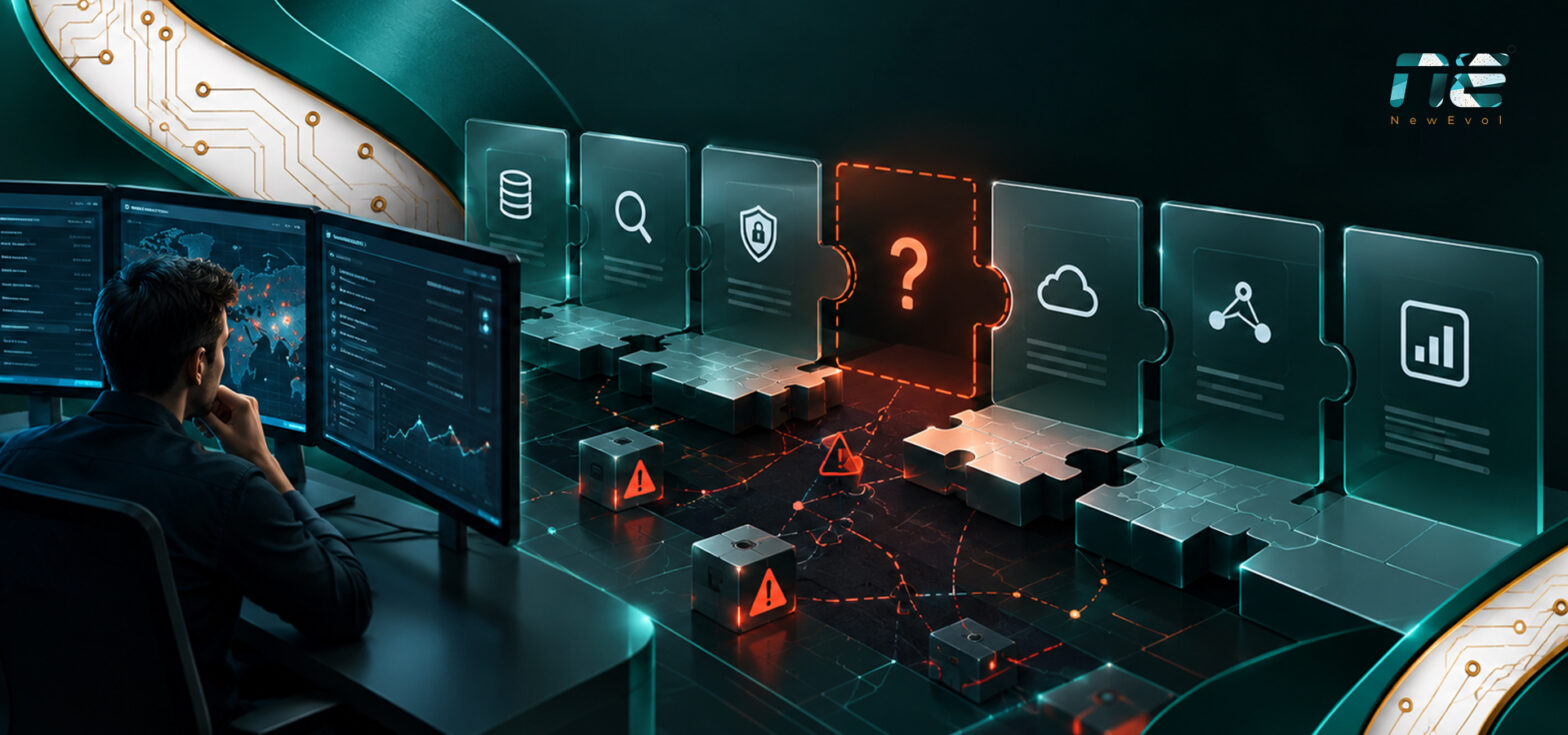
Most SIEM buying decisions start with a price comparison. Security leaders review quotes, compare licence tiers, and pick the option that fits the budget. That’s reasonable, but it can hide a more important question: how much of your environment will your team actually be able to see and investigate?
A SIEM platform is only as useful as the data it can reach. When pricing is split across ingestion tiers, retention periods, and separately licensed modules, each budget decision also decides what gets monitored. Over time, security coverage can shrink to fit the licence rather than the organisation’s real risk.
This article covers how per-module pricing affects visibility, why that matters for threat hunting, and how to judge SIEM cost over three years instead of by the first-year list price.
Why Threat Hunting Platform Pricing Is Also a Security Coverage Question
Threat hunting means searching proactively for threats that automated detections missed. It depends on three things: broad data access, enough historical depth, and analytical tools that can connect activity across systems.
So the real cost of threat hunting isn’t just the price of a hunting feature. It’s the combined cost of collecting the right logs, keeping them long enough, and licensing the capabilities analysts need to use them. If any one of these is limited by price, hunting quality drops, even if the tool itself looks affordable.
In practice, pricing structure decides data access. Data access decides visibility. Visibility decides what threat hunting can realistically achieve.
How Per-Module Pricing Changes Security Coverage
Modular licensing can look flexible at first. Organisations buy what they need now and add capabilities later. The trouble is that “what we need” and “what we can justify this year” often become the same thing.
Each module becomes a separate budget request. Every new log source, extra month of retention, or analytics capability has to compete with other spending. Some requests get approved and some get postponed. Gradually, the security programme takes on the shape of the licence.
The Impact of Ingestion-Based Pricing
Many SIEM pricing models are based on daily data ingestion, measured in gigabytes per day or events per second. Higher tiers cost more, so teams have a direct financial reason to limit what they collect.
This usually leads to log prioritisation. Teams keep firewall, identity, and endpoint logs but drop or sample others, such as:
- DNS and proxy logs
- Cloud audit and SaaS activity logs
- Application and database logs
- Internal network flow data
Each decision may make sense on its own. Together, they create blind spots. Attackers who move laterally, misuse legitimate credentials, or abuse cloud services often leave traces in exactly the high-volume logs that get cut first.
The question for buyers isn’t only “What does ingestion cost?” It’s also “Which log sources will we leave out to stay within our tier?”
Retention Costs and Historical Threat Hunting
Security data retention is the next cost pressure. Storing data for longer increases storage costs, especially for “hot” data that can be searched immediately.
Shorter retention directly limits threat hunting. Many intrusions stay undetected for weeks or months. When a new indicator of compromise is published, analysts need to search back through history to see whether it has already appeared in their environment. If the relevant logs were deleted after 30 days, that question can’t be answered.
Retention planning should cover both current and future data volumes. A retention policy that is affordable at today’s ingestion level may cost far more in two years as data grows. Tiered storage (hot, warm, and cold) can reduce costs, but buyers should check how quickly archived data can be restored and whether restoring it costs extra.
When Threat Hunting Becomes a Paid Add-On
In some modular structures, threat hunting tools such as advanced query interfaces, hunting workbooks, or investigation workspaces are sold separately from core log management and alerting.
When hunting is a paid add-on, it often becomes optional in budget discussions. Teams may run on alert-driven detection alone and plan to add hunting “next year.” In the meantime, the SOC reacts to known patterns but has limited ability to find unknown ones.
behavioral analytics and Long-Tail Data
The same pattern applies to behavioral analytics (often called UEBA), advanced correlation, and long-tail data analysis. Long-tail data means rarely seen events that can reveal unusual activity.
behavioral analytics sets a baseline of normal user and entity activity and flags deviations. That’s how compromised accounts and insider threats are often found. It needs broad, consistent, long-term security data to work well. If this capability is licensed separately, or the data it depends on is limited by ingestion caps, its value drops.
Organisations may end up buying only the analytics they can justify within the current budget, and security coverage narrows a little with each deferred purchase.
When Licensing Boundaries Become Risk Boundaries
Ideally, a security team’s visibility is set by risk: what assets matter, what threats are likely, and where attackers could operate. Modular licensing can quietly replace that with a different limit: what has been purchased.
A common pattern follows. Analysts hunt across the data their licence covers because that’s the data available. Reports and dashboards show activity inside those limits. Over time, the team may start treating the licensed scope as the full scope of the environment.
This is rarely a deliberate choice. It happens slowly, one budget cycle at a time. But the result is that the licensing boundary gets mistaken for the risk boundary.
The Hidden Cost of Limited Coverage
Incomplete visibility has practical consequences:
- Incident investigation: Missing logs make it harder to rebuild timelines and scope a breach.
- Threat hunting: Hunters can’t test hypotheses against data they don’t have.
- Detection engineering: New detection rules can’t be built or validated for unmonitored sources.
- Compliance investigations: Auditors may ask for records that were never collected or were deleted early.
- Forensic analysis: Without historical and behavioural context, root-cause analysis becomes guesswork.
The issue isn’t whether a SIEM is expensive or cheap. It’s how much security coverage the pricing structure allows.
How to Calculate Three-Year Total Cost of Coverage
Comparing first-year quotes rarely shows the true SIEM cost. A better approach is to estimate the Three-Year Total Cost of Coverage: the cost of keeping the level of visibility your organisation actually needs.
Include the following in your assessment:
- Current daily ingestion volume and number of data sources
- Expected annual data growth
- Retention requirements, including hot, warm, and cold storage
- Threat hunting, behavioral analytics, and long-tail data capabilities
- Any additional modules
- User or analyst licensing, if applicable
- Data added by new applications, cloud workloads, endpoints, and business systems
- Implementation, tuning, and ongoing security operations costs
- Potential migration or expansion costs
A simple framework:
Three-Year Total Cost of Coverage = Base Platform Cost + Ingestion Costs + Retention Costs + Required Security Modules + Data Growth Costs + Operational Costs
A Practical Three-Year Cost Example
The figures below are hypothetical and for illustration only. They don’t represent any vendor’s actual pricing.
An organisation compares two options, each with 12-month retention, threat hunting, and behavioral analytics, and assumes 25% annual data growth.
- Option A (modular) has a lower first-year quote of $90,000 (base plus ingestion).
- Option B (broader inclusive licence) quotes $135,000 in year one.
| Cost component (3 years) | Option A: Modular | Option B: Inclusive |
|---|---|---|
| Base platform | $150,000 | $330,000 (hunting and analytics included) |
| Ingestion (current volume) | $120,000 | $75,000 |
| Extended retention | $60,000 | $45,000 |
| Hunting and behavioral analytics modules | $165,000 | $0 |
| Data growth (25% per year) | $48,750 | $32,500 |
| Operational costs | $90,000 | $90,000 |
| Three-Year Total Cost of Coverage | $633,750 | $572,500 |
Option A looked about 33% cheaper at first. Once the required coverage is included, it costs roughly $61,000 more over three years. The result will vary for every organisation, and sometimes a modular model will be the better fit. The point is to compare like with like: the cost of the same level of coverage.
Questions Security Leaders Should Ask Before Selecting a SIEM
- Which log sources would we exclude to stay within budget, and what risk does that create?
- How do costs change as our data grows 20–40% per year?
- What retention period do our investigations and compliance obligations actually need?
- Are threat hunting and behavioral analytics included or licensed separately?
- What does it cost to restore archived data for a historical investigation?
- Are there analyst, user, or query-based limits?
- What will it cost to add new cloud platforms or business applications?
- Does the SIEM platform let us investigate the data we need, not just the data we can afford to ingest?
How a More Flexible SIEM Pricing Model Can Support Broader Visibility
No single pricing model suits every organisation. Still, pricing structures that make data volume, retention, and core analytics more predictable can reduce the pressure to trade visibility for budget.
When evaluating options, look at how each one handles deployment flexibility, data coverage, retention, and the overall cost of security operations. NewEvol is one example of a SIEM approach that can be assessed on these criteria, alongside others on your shortlist. The goal is to find a model where security decisions stay security decisions.
Conclusion
SIEM pricing should be judged by the cost of maintaining the security coverage you need over time, not by the initial platform price. Per-module structures can gradually turn security decisions into budget decisions and narrow visibility to what the licence covers.
Before you choose, calculate your three-year total cost of coverage and ask one direct question: will this pricing model let our team investigate the data we actually need? Whether you are evaluating NewEvol or any other option, that question should guide the decision.
FAQ
1. What is the real cost of threat hunting?
It includes the cost of collecting relevant logs, keeping them long enough, and licensing the analytics tools hunters need, not just the price of a hunting feature.
2. How does SIEM ingestion pricing affect security visibility?
Ingestion-based pricing can push teams to drop high-volume log sources to stay within a tier, which creates blind spots.
3. Why does retention matter for threat hunting?
Many threats go unnoticed for weeks or months. Longer retention lets analysts search historical data when new indicators appear.
4. What happens when threat hunting is a paid module?
It’s often deferred in budget cycles, leaving teams dependent on alert-driven detection with limited proactive capability.
5. How does data growth affect SIEM pricing?
Data volumes usually grow every year. Under volume-based pricing, costs can rise quickly unless growth is planned for upfront.
6. What should be included when comparing threat hunting platform pricing?
Base cost, ingestion, retention, required modules, data growth, and operational costs, all modelled over three years.