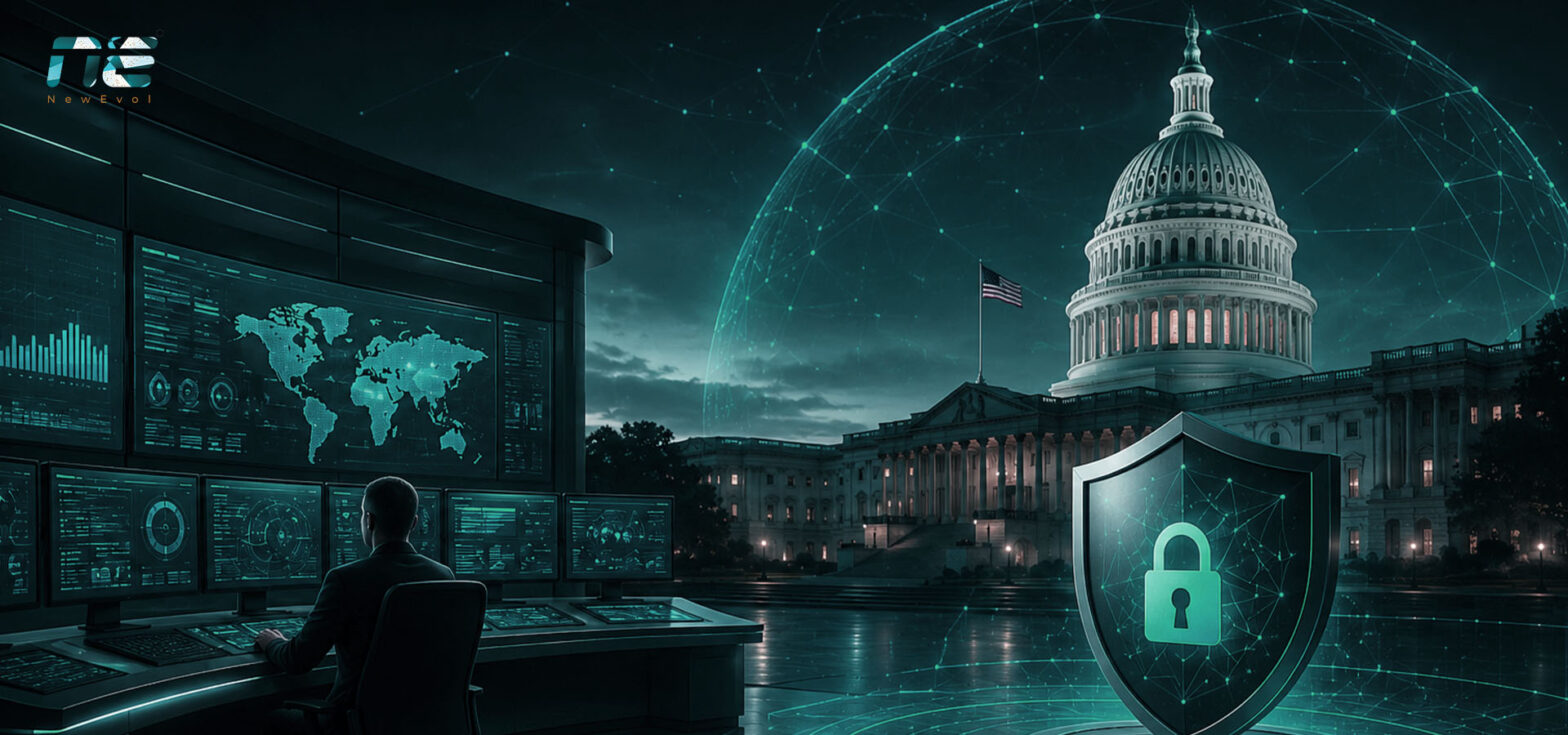
Public institutions support services people depend on every day, including healthcare, transportation, public safety, taxation, education, utilities, and citizen identity systems. When a cyber incident disrupts these services, the impact can affect public trust, economic activity, emergency response, and national resilience.
Government SOC modernization must therefore be treated as a strategic transformation, not a routine technology upgrade. A modern security operations center should help agencies understand risk, detect meaningful threats, coordinate response, protect critical services, and maintain compliance across complex environments.
Public-sector teams now operate across legacy infrastructure, cloud platforms, remote endpoints, digital services, identity systems, and multi-agency networks. They also face ransomware, supply-chain attacks, nation-state activity, insider risks, and rapidly changing attack techniques. Government cybersecurity programs must move from fragmented monitoring toward integrated, intelligence-led, and outcome-focused operations.
Why Traditional Government SOC Models Are Under Pressure
Many public-sector SOCs were built from security tools added over several years. Each tool may address a specific need, but together they often create operational complexity.
Common challenges include:
- Disconnected monitoring across agencies and locations
- Limited visibility into cloud, identity, application, and endpoint activity
- High alert volumes and excessive false positives
- Manual investigation and escalation processes
- Inconsistent logging and data-retention policies
- Aging infrastructure with high maintenance costs
- Shortages of experienced security analysts
- Strict privacy, audit, and data residency requirements
- Long procurement cycles and fixed budgets
These conditions make it difficult for analysts to identify what matters. A SOC may generate thousands of alerts and close hundreds of tickets while still missing a high-impact attack.
Modernization should reduce uncertainty and improve decision-making. The objective is not to collect more data or create more dashboards. It is to improve visibility, detection quality, response speed, accountability, and operational resilience.
SOC Modernization Is More Than a Platform Replacement
Replacing a legacy security information and event management system or introducing automation does not automatically create a modern SOC. A complete transformation must address five connected areas.
Technology
The architecture should support scalable data collection, centralized analysis, threat detection, case management, automation, reporting, and secure data retention.
Processes
Triage, escalation, investigation, containment, recovery, and reporting workflows should be documented and consistently followed.
People
Analysts, engineers, incident responders, compliance teams, and agency leaders need suitable training, system access, and decision-making authority.
Governance
Ownership must be clear for security data, detection rules, incident response, regulatory reporting, automation approvals, and cross-agency coordination.
Measurement
SOC performance should be evaluated through risk reduction and operational outcomes, not activity volume alone.
Addressing these areas together prevents agencies from implementing modern technology while continuing to use outdated procedures and unclear responsibilities.
Building Centralized Security Visibility
A modern government SOC needs a reliable view across its entire technology environment, including:
- On-premises infrastructure and data centers
- Public, private, and sovereign cloud platforms
- Endpoints, mobile devices, and remote-access systems
- Networks, applications, databases, and APIs
- Identity and access management systems
- Operational technology and critical infrastructure
- Third-party and shared-service environments
Centralized security monitoring allows analysts to correlate activity across these systems. A suspicious login may appear low risk when viewed alone. When combined with unusual privilege changes, endpoint activity, and large data transfers, it may reveal a serious compromise.
Visibility also depends on data quality. Logs should be collected consistently, time-synchronized, normalized, enriched, and retained according to policy.
Agencies should define why each data source is required, which detection use cases it supports, how long its information must be retained, and who is responsible for maintaining the integration.
This approach prevents unnecessary data collection while ensuring that analysts have the information required to detect and investigate threats.
Improving Threat Detection and Investigation
Modern threat detection should combine several methods rather than relying only on fixed correlation rules.
Useful capabilities include:
- Behavioral analytics for users, devices, and applications
- Threat intelligence enrichment
- Detection mapped to known attacker techniques
- Identity-focused analytics
- Baseline and anomaly detection
- Cross-source event correlation
- Risk-based alert prioritization
Detection engineering should be treated as a continuous discipline. Rules and analytics require regular testing, tuning, documentation, and review.
Security teams should verify whether each detection identifies meaningful behaviour, generates manageable alert volumes, and gives analysts enough context to investigate.
Analysts also need a unified investigation view. Timelines, assets, users, indicators, evidence, and previous cases should be accessible through a consistent workflow.
This reduces tool switching, shortens investigation time, and improves consistency across agencies, departments, and locations.
Using Automation Without Losing Control
Security automation can reduce repetitive work and help limited teams respond faster. Suitable early automation use cases include:
- Enriching alerts with asset and identity context
- Checking indicators against threat intelligence sources
- Grouping duplicate or related alerts
- Assigning cases based on severity and ownership
- Sending notifications to responsible teams
- Collecting evidence for investigations
- Creating audit-ready case records
Sensitive actions such as disabling accounts, isolating endpoints, blocking network traffic, or changing access permissions should be introduced gradually.
Human approval may remain necessary where an automated action could affect essential public services or critical infrastructure.
Every automated workflow should have defined conditions, owners, logs, exception handling, rollback procedures, and regular testing. Security automation should strengthen operational control rather than create hidden dependencies.
Supporting Compliance, Sovereignty, and Auditability
Government environments often impose strict requirements for data location, access, retention, privacy, and reporting.
Before selecting an architecture, agencies should determine:
- Where security data may be stored and processed
- Whether cross-border data transfers are permitted
- Which encryption and access controls are required
- Who may access specific data sets
- How long logs and incident evidence must be retained
- Which reports auditors and regulators require
- How disaster recovery will meet policy obligations
Role-based access controls are essential in multi-agency environments. Analysts should have enough access to perform their responsibilities without exposing unrelated or sensitive information.
Auditability should also be built into daily operations. Investigations, workflow changes, detection updates, access decisions, and automated actions should all produce clear and traceable records.
A Phased Roadmap for Modernizing a Government SOC
A phased approach reduces disruption, controls costs, protects service continuity, and provides stakeholders with measurable evidence of progress.
Phase 1: Assess the Current Environment
Document the existing architecture, security tools, data sources, workflows, staffing model, service dependencies, contracts, and compliance obligations.
Identify duplicated capabilities, unsupported systems, visibility gaps, and operational bottlenecks.
Phase 2: Define Objectives and Priorities
Set clear outcomes such as faster containment, better visibility of privileged activity, improved cloud monitoring, fewer false positives, or stronger audit readiness.
Prioritize systems that support essential services, critical infrastructure, and high-value public data.
Phase 3: Establish Governance
Define executive sponsorship, funding ownership, architecture authority, data responsibilities, incident escalation paths, and cross-agency coordination.
Create approval processes for risk acceptance, automation, data access, and major operational changes.
Phase 4: Confirm Compliance and Data Requirements
Map legal, regulatory, sovereignty, retention, privacy, and audit requirements before selecting the target architecture.
Completing this work early can prevent expensive redesigns later in the program.
Phase 5: Select a Secure and Scalable Architecture
Evaluate deployment models, resilience, data handling, integrations, access controls, and long-term operating costs.
The architecture should support future growth without requiring every agency or department to adopt identical infrastructure.
Phase 6: Migrate Data and Detection Use Cases
Start with high-priority systems and clearly defined detection use cases. Validate data quality and detection performance before expanding the migration.
Legacy and modern systems may need to operate in parallel during the transition to protect monitoring continuity.
Phase 7: Introduce Automation Gradually
Begin with low-risk enrichment, notification, and workflow tasks. Add automated response actions only after testing, approval, and operational review.
Phase 8: Train Teams and Update Procedures
Train analysts, engineers, managers, compliance teams, and service owners. Update incident playbooks, escalation paths, reporting procedures, and responsibilities.
Phase 9: Measure and Improve
Review detection effectiveness, response speed, operational workload, service impact, and compliance performance.
Use the findings to refine detections, integrations, workflows, staffing decisions, and future modernization priorities.
This phased model builds confidence among security, procurement, finance, legal, compliance, and operational stakeholders.
Procurement Considerations for Public-Sector Buyers
Procurement teams should evaluate more than feature lists. A technically capable platform can still create long-term cost, integration, governance, or data-sovereignty problems.
Security, Resilience, and Scalability
Review encryption, access controls, system segregation, high availability, disaster recovery, secure administration, and protection of stored data.
Confirm that the platform can support future data growth, additional agencies, new cloud services, and expanding detection workloads.
Interoperability and Deployment Flexibility
Check compatibility with existing security tools, data formats, identity systems, cloud platforms, ticketing systems, and threat intelligence sources.
The platform should support the required on-premises, cloud, sovereign cloud, hybrid, or multi-region deployment model.
Data Ownership and Portability
Clarify who owns the collected data, how it can be exported, which formats are supported, and what happens when the contract ends.
Agencies should avoid arrangements that make it difficult or expensive to retrieve their security data.
Total Cost of Ownership
Cost analysis should include:
- Licensing
- Data storage
- Data transfer
- Infrastructure
- Integration
- Migration
- Training
- Support
- Customization
- Long-term maintenance
Focusing only on the initial purchase price can hide significant operational costs.
Skills and Operational Support
Assess the expertise required to operate, maintain, and tune the environment. Review documentation, implementation support, training, and knowledge-transfer commitments.
Vendor Lock-In and Transparency
Examine proprietary formats, custom integrations, contract terms, transition support, and exit requirements.
Procurement decisions should be evidence-based, traceable, and aligned with public accountability obligations.
Platforms such as NewEvol can support centralized security visibility, scalable data management, advanced threat detection, workflow automation, and compliance-focused monitoring across complex government environments. Any platform selection should still be based on the agency’s architecture, risk profile, sovereignty obligations, and operating requirements.
Measuring What Matters
A modern SOC should not be judged mainly by the number of alerts generated, incidents reviewed, dashboards produced, or tickets closed. These figures show workload, but they do not prove that cyber risk has been reduced.
More meaningful measures include:
- Mean time to detect suspicious activity
- Mean time to investigate validated incidents
- Mean time to contain confirmed threats
- Detection accuracy
- False-positive reduction
- Coverage of critical assets
- Coverage of priority attack techniques
- Percentage of incidents managed through approved playbooks
- Reliability and effectiveness of automation
- Compliance reporting efficiency
- Analyst productivity and workload balance
- Availability of monitoring and response services
- Repeat incidents caused by unresolved weaknesses
- Recovery performance and operational resilience
Metrics should be connected to critical public services. Reducing containment time is valuable because it can limit disruption, data exposure, financial loss, and recovery costs.
Leaders should also review long-term trends rather than isolated monthly figures. A single reporting period may be affected by a major incident, migration activity, or the introduction of a new data source.
The Role of a Modern SOC in Public-Sector Resilience
The next generation of public-sector security operations will be defined by integration, intelligence, automation, accountability, and adaptability.
A mature SOC helps agencies:
- Detect threats across distributed environments
- Prioritize incidents according to public and operational risk
- Coordinate technical, security, and service-delivery teams
- Maintain evidence for compliance and investigation
- Protect essential services during security incidents
- Learn from incidents and strengthen future defences
Government cybersecurity becomes stronger when the SOC connects with enterprise risk management, business continuity planning, digital transformation, cloud governance, and executive decision-making.
Conclusion
Government SOC modernization is a long-term transformation combining technology, people, processes, governance, and measurement. Strong programs begin with clear risk objectives, prioritize essential services, respect sovereignty and compliance requirements, and progress through controlled phases.
A successful modern SOC does more than monitor alerts. It improves decision-making, reduces incident impact, strengthens accountability, and helps public institutions continue delivering trusted services during cyber disruption.
NewEvol is designed to support secure, scalable, and compliance-driven security operations through centralized visibility, advanced detection, security data management, and workflow automation. Its value should be assessed within a broader modernization strategy built around public-sector requirements and measurable outcomes.
Frequently Asked Questions
What is a modern government SOC?
A modern government SOC is a centralized security function that combines integrated visibility, threat detection, investigation, automation, incident response, governance, and compliance reporting across public-sector environments.
Why do government SOCs need modernization?
Many existing SOCs rely on fragmented tools, legacy infrastructure, manual workflows, and limited cloud visibility. Modernization helps agencies detect threats earlier, respond faster, reduce operational complexity, and protect essential services.
What are the biggest challenges in modernizing a public-sector SOC?
Common challenges include legacy integration, limited budgets, skills shortages, procurement delays, data sovereignty requirements, unclear ownership, and the need to maintain service continuity during migration.
How can automation improve government security operations?
Automation can enrich alerts, collect evidence, assign cases, reduce duplicate work, and accelerate approved response steps. High-impact actions should include strong controls, testing, and human oversight.
How should agencies manage data residency requirements?
Agencies should identify applicable laws, regulations, and internal policies before selecting an architecture. They must define where data can be stored, processed, accessed, transferred, backed up, and retained.
How long does a SOC modernization program take?
The timeline depends on the program scope, agency size, architecture, procurement process, integration complexity, and compliance obligations. A phased program is generally more practical than a single large migration.
How should modernization success be measured?
Success should be measured through improved detection, faster investigation and containment, broader critical-asset coverage, fewer false positives, stronger audit readiness, better analyst productivity, and reduced disruption to public services.