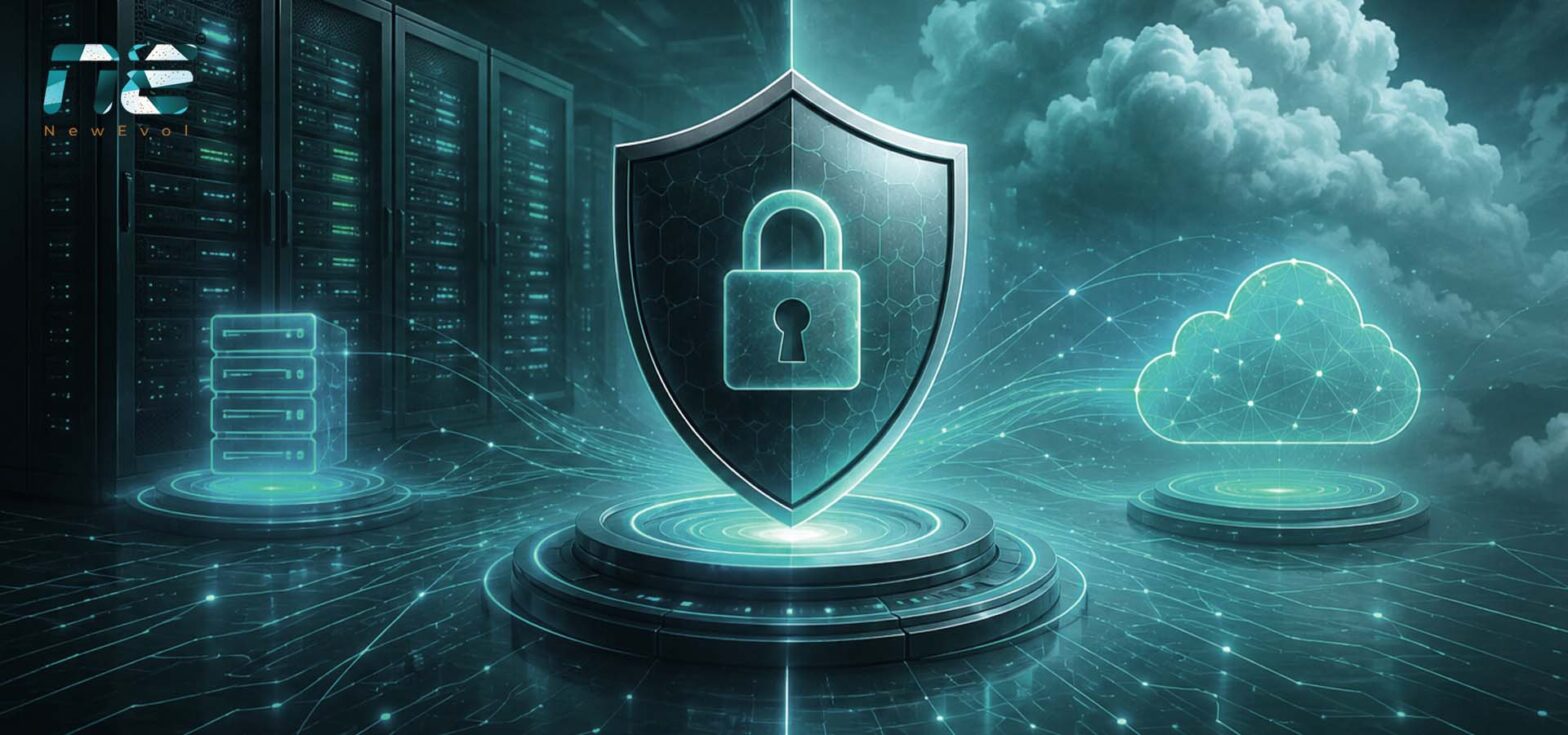
Organizations across India are strengthening their cybersecurity and governance strategies as the Digital Personal Data Protection (DPDP) Act, 2023 introduces a structured approach to protecting personal data. Alongside implementing privacy controls, businesses must also ensure continuous monitoring, rapid threat detection, and comprehensive audit capabilities. This has placed Security Information and Event Management (SIEM) platforms at the center of compliance planning.
Selecting the right SIEM deployment model is no longer just a technology decision. Whether an organization chooses an on-premises or cloud-based deployment can influence data residency, operational efficiency, incident response, compliance reporting, and long-term risk management. Every organization has unique regulatory obligations, infrastructure investments, and security priorities that affect this choice.
This guide compares both deployment models, highlighting their advantages, limitations, and key decision factors to help security leaders build a compliant and future-ready security monitoring strategy.
Understanding DPDP Act 2023 Requirements for Security Monitoring
The DPDP Act establishes responsibilities for organizations that collect, process, and store personal digital data. Businesses must implement reasonable security safeguards to protect personal information against unauthorized access, misuse, alteration, or disclosure.
While the Act does not prescribe specific cybersecurity technologies, organizations are expected to demonstrate strong governance and maintain visibility into their IT environments. This includes:
- Continuous monitoring of security events
- Timely detection of suspicious activities
- Secure log retention
- Incident investigation capabilities
- Comprehensive audit trails
- Evidence for regulatory reviews
A centralized security monitoring solution helps organizations collect logs from multiple systems, correlate security events, identify anomalies, and generate reports that support compliance initiatives.
Why SIEM Plays an Important Role in DPDP Compliance
A modern SIEM platform acts as the operational backbone of enterprise security monitoring by collecting and analyzing logs from applications, endpoints, servers, cloud workloads, and network devices.
Key benefits include:
- Real-time threat detection
- Centralized log collection
- Automated event correlation
- Faster incident investigations
- Compliance reporting
- Long-term log retention
- Improved visibility across hybrid environments
These capabilities not only improve cybersecurity operations but also help organizations demonstrate accountability and preparedness during compliance assessments.
What Is an On-Premises SIEM?
An on-premises SIEM is deployed within an organization’s own data center or private infrastructure. The enterprise owns and manages the servers, storage, networking, and security configurations required to operate the platform.
Many highly regulated industries such as banking, government, healthcare, and critical infrastructure continue to rely on on-premises deployments because they provide extensive control over sensitive information and internal security policies.
Advantages of On-Premises SIEM
Complete Infrastructure Control
Organizations manage every aspect of the environment, including hardware, software updates, network architecture, and access policies.
Greater Control Over Data
Security logs remain within enterprise-managed infrastructure, helping organizations implement internal governance requirements.
Flexible Customization
Security teams can integrate specialized tools, develop custom detection rules, and tailor workflows according to operational requirements.
Support for Legacy Systems
Many enterprises continue to operate older applications and industrial systems that integrate more easily with locally deployed security platforms.
Challenges of On-Premises SIEM
Despite its strengths, on-premises deployment comes with several challenges:
- High upfront infrastructure investment
- Ongoing hardware maintenance
- Capacity planning requirements
- Longer deployment timelines
- Greater operational complexity
- Dedicated security and IT personnel
Scaling storage and computing resources often requires additional procurement cycles, making rapid expansion more difficult.
What Is a Cloud SIEM?
A cloud SIEM is delivered as a hosted service where infrastructure, platform maintenance, and updates are managed by the provider. Organizations connect their data sources securely to the platform while focusing primarily on security operations rather than infrastructure management.
Cloud adoption has accelerated because enterprises increasingly require flexibility, remote accessibility, and faster deployment.
Advantages of Cloud SIEM
Rapid Deployment
Organizations can begin collecting security logs much faster without waiting for hardware installation.
Elastic Scalability
Storage and processing resources can expand as business requirements grow, making cloud deployments well suited for rapidly changing environments.
Lower Initial Investment
Cloud deployments generally reduce capital expenditure by replacing large infrastructure purchases with subscription-based pricing.
Automatic Updates
Platform enhancements, security patches, and feature improvements are typically delivered without significant operational effort.
Simplified Operations
Security teams spend less time maintaining infrastructure and more time investigating threats and improving security posture.
Challenges of Cloud SIEM
Organizations should also evaluate several important considerations before choosing a cloud deployment:
- Internet connectivity dependency
- Shared responsibility for security
- Vendor governance requirements
- Data residency evaluation
- Integration planning for legacy environments
Choosing between on-premises and cloud deployment requires balancing compliance objectives with operational efficiency, scalability, governance, and long-term business strategy. In the next section, we’ll compare both models across data residency, security controls, costs, incident response, governance, and compliance reporting to help determine which approach best aligns with organizational requirements.
On-Prem vs Cloud SIEM Comparison for DPDP Act 2023
The following comparison highlights the key differences between the two deployment models from a compliance and operational perspective.
|
Comparison Area |
On-Prem SIEM |
Cloud SIEM |
|
Data Residency |
Full control over data location |
Depends on cloud region selection |
|
Data Sovereignty |
Enterprise manages storage and access |
Requires provider compliance and governance |
|
Compliance Reporting |
Highly customizable |
Automated reporting and dashboards |
|
Scalability |
Limited by available infrastructure |
Virtually unlimited and elastic |
|
Deployment Speed |
Weeks or months |
Days or even hours |
|
Maintenance |
Managed internally |
Managed by the provider |
|
Infrastructure Cost |
High capital expenditure |
Subscription-based operational expense |
|
Operational Cost |
Requires dedicated IT resources |
Lower infrastructure management effort |
|
Security Controls |
Fully customizable |
Shared responsibility with advanced built-in controls |
|
Availability |
Depends on enterprise architecture |
High availability through cloud infrastructure |
|
Disaster Recovery |
Organization-managed |
Built-in redundancy and backup options |
|
Incident Response |
Deep customization for workflows |
Faster deployment with integrated automation |
|
Integration |
Strong for legacy systems |
Strong for cloud-native applications |
|
Governance |
Internal ownership |
Shared governance with provider |
|
Long-Term Flexibility |
Hardware upgrades required |
Easily adapts to business growth |
Neither deployment model is universally better. The right choice depends on business priorities, compliance obligations, existing infrastructure, and future growth plans.
Data Residency and Sovereignty Considerations
Data residency has become an important consideration for organizations managing sensitive personal information. While the DPDP Act provides flexibility regarding data transfers under specified conditions, businesses should understand where their security logs are stored and processed.
For organizations with strict internal governance policies, keeping logs within enterprise-controlled infrastructure may simplify compliance management. Others may benefit from cloud providers offering regional data centers that support local storage requirements.
Before selecting a deployment model, organizations should evaluate:
- Geographic location of data centers
- Cross-border data transfer policies
- Encryption standards
- Vendor certifications
- Contractual security commitments
- Data retention policies
Hybrid architectures are also becoming popular, allowing critical logs to remain on-premises while less sensitive telemetry is processed in the cloud.
Security Controls Across Both Deployment Models
Regardless of deployment architecture, a SIEM platform should deliver strong security capabilities that protect sensitive data and support compliance objectives.
Key security controls include:
- End-to-end encryption for data at rest and in transit
- Multi-factor authentication (MFA)
- Role-based access control (RBAC)
- Secure log collection and storage
- Tamper-resistant audit trails
- Continuous threat monitoring
- Automated alerting
- Security analytics and behavioral detection
- Integration with endpoint, identity, and network security tools
Organizations should focus more on the effectiveness of these controls than on deployment location alone.
Cost Comparison Beyond Licensing
Cost evaluations should extend beyond software licensing to include the total cost of ownership (TCO).
On-Premises SIEM Costs
- Hardware procurement
- Storage expansion
- Data center operations
- Software maintenance
- Hardware refresh cycles
- Dedicated administration teams
Cloud SIEM Costs
- Subscription fees
- Data ingestion charges
- Long-term storage
- Network bandwidth
- Premium support services
- Optional security features
While cloud deployments often reduce upfront capital investment, organizations with predictable workloads and existing infrastructure may find on-premises deployments more economical over the long term.
Incident Response and Compliance Reporting
Rapid detection and response are essential for minimizing the impact of cyber incidents.
Cloud deployments often provide faster implementation of automated playbooks, built-in dashboards, and AI-assisted analytics. On-premises environments, however, allow organizations to build highly customized response workflows tailored to internal operational processes.
Effective SIEM platforms should support:
- Real-time alerting
- Threat hunting
- Digital forensics
- Automated case management
- Executive compliance dashboards
- Audit-ready reporting
- Long-term evidence preservation
These capabilities help organizations demonstrate accountability during internal audits and regulatory reviews.
Governance and Long-Term Risk Management
Selecting a SIEM deployment should align with long-term governance objectives rather than immediate infrastructure preferences.
Security leaders should evaluate:
- Future compliance requirements
- Business expansion plans
- Multi-cloud adoption
- Operational resilience
- Disaster recovery strategy
- Security team capabilities
- Vendor flexibility
- Integration with future technologies
Many enterprises are gradually moving toward hybrid security architectures that combine the strengths of both deployment models while reducing operational risk.
How to Choose the Right SIEM Deployment Model
There is no one-size-fits-all solution.
On-premises SIEM may be suitable for:
- Government agencies
- Critical infrastructure operators
- Large enterprises with existing data centers
- Organizations requiring extensive customization
- Businesses with strict internal governance policies
Cloud SIEM may be suitable for:
- Cloud-first organizations
- Rapidly growing businesses
- Companies with distributed workforces
- Organizations seeking faster deployment
- Businesses with limited infrastructure resources
Hybrid deployments are an excellent choice for enterprises that require flexibility while balancing compliance, scalability, and operational efficiency.
Platforms such as NewEvol provide deployment flexibility by supporting on-premises, cloud, and hybrid architectures. This enables organizations to adapt their security operations as business requirements and compliance obligations evolve without being locked into a single deployment model.
Conclusion
Choosing between on-premises and cloud SIEM is a strategic decision that affects security operations, governance, and regulatory readiness. Factors such as data residency, scalability, cost, security controls, and operational complexity should all be evaluated carefully.
Rather than focusing solely on where the platform is hosted, organizations should prioritize how effectively it supports continuous monitoring, incident response, audit readiness, and long-term compliance. As regulatory expectations continue to evolve, selecting a flexible architecture that aligns with business objectives will help build a stronger and more resilient cybersecurity program.
Frequently Asked Questions
1. What is the DPDP Act 2023?
It is India’s data protection law that establishes rules for collecting, processing, storing, and protecting digital personal data.
2. How does SIEM support compliance?
SIEM centralizes security logs, detects threats, maintains audit trails, and simplifies compliance reporting.
3. Is cloud SIEM compliant with DPDP requirements?
Yes, provided organizations evaluate data residency, security controls, and provider compliance capabilities.
4. Does the DPDP Act require all data to remain in India?
Organizations should monitor applicable government notifications and ensure their data handling practices comply with current legal requirements.
5. Which deployment model is more secure?
Security depends on implementation, governance, and operational controls rather than deployment location alone.
6. What are the benefits of on-premises SIEM?
Greater infrastructure control, customization, and easier integration with legacy systems.
7. Can organizations adopt a hybrid SIEM model?
Yes. Many enterprises combine on-premises and cloud deployments to balance compliance, performance, and scalability.